
An Introduction to the National Flood Insurance Program (NFIP)
An Introduction to the National Flood Insurance Program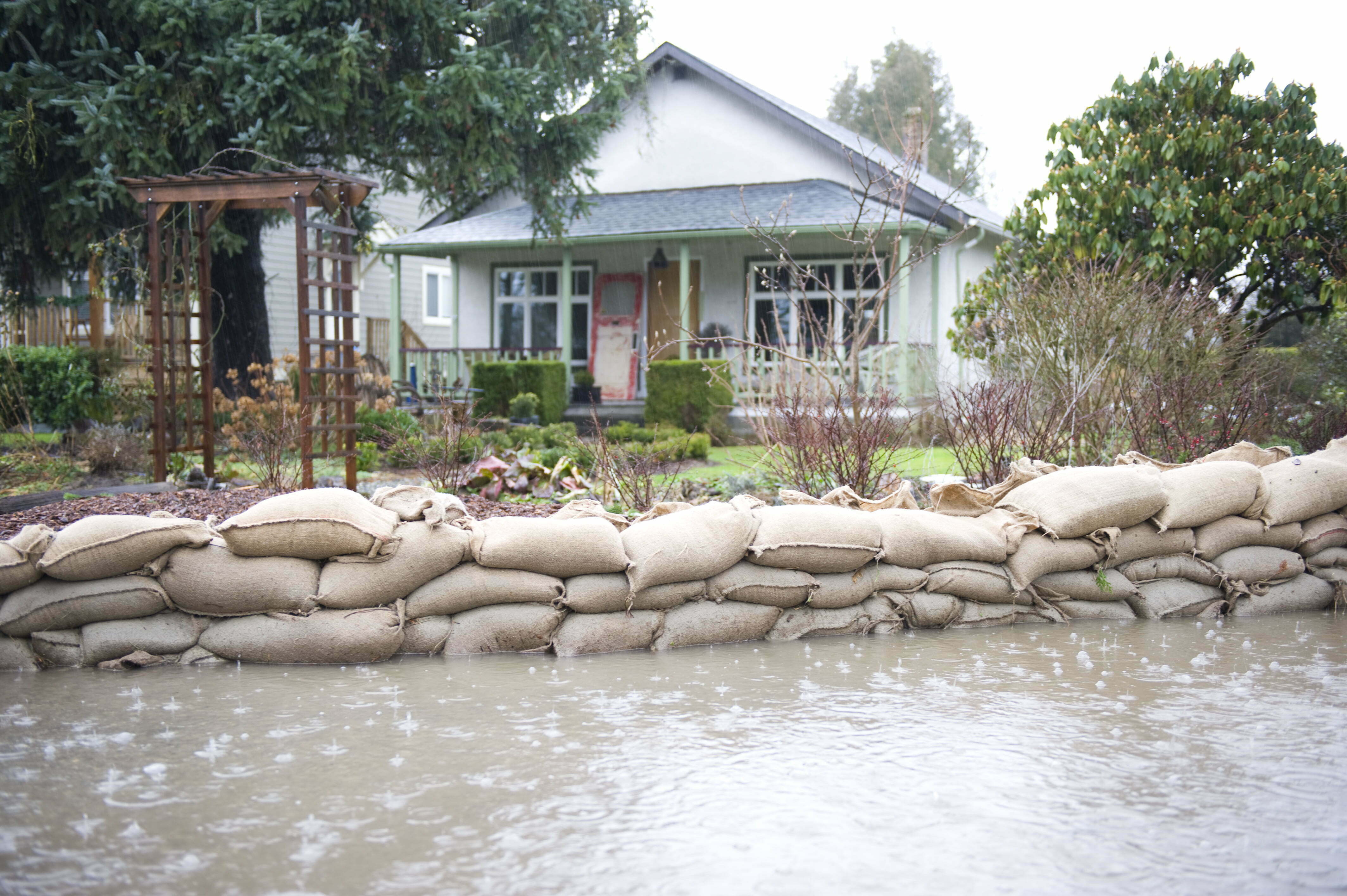
Home in background with sandbags and water surrounding it.
The National Flood Insurance Program (NFIP) and its offshoot discount incentive program, the Community Rating System (CRS), help communities get back on their feet in the wake of flooding incidents by providing affordable insurance to property owners and encouraging communities to adopt and enforce floodplain management regulations.
The program, managed by the Federal Emergency Management Agency (FEMA), incentivizes communities to prepare and plan for flooding by requiring that communities adopt and adhere to certain regulations while also agreeing to enforce floodplain management practices in order to qualify for insurance under NFIP. The program is comprised of three components, including:
- Providing flood insurance
- Improving floodplain management
- Developing flood zone hazard maps, which are updated and maintained through FIRMs.
Updates and Improvements to NFIP
NFIP was implemented in 1965 after Hurricane Betsy – the United States’ first “billion-dollar storm” – and has since undergone several updates and improvements. The Biggert –Waters Flood Insurance Reform Act of 2012, for example, modified the CRS to its present form and enacted three major changes to the flood insurance program:
- Properties built before the NFIP were no longer grandfathered into the program.
- Repetitive Loss Properties, homes that were flooded two or more times, would no longer be covered.
- Insurance premiums provided by the NFIP would be calculated in such a way that better reflects actual actuarial
The updates made by Biggert-Waters left numerous homeowners without flood insurance, resulting in the subsequent passage of the Homeowner Flood Insurance Affordability Act of 2014. The bill delays drastic flood insurance premium increases with three main components:
- Rolling back the expiration date set by Biggert-Waters for those properties that would no longer be “grandfathered in,”
- Delaying the more dramatic premium increases that were set to take place
- Putting an annual cap on premium increases.
Critics of these measures have two primary concerns. First, policy holders who do not own high risk properties (grandfathered, repetitive loss, etc.) are left in a position to continue subsidizing them. Second, many professionals believe the measures will make it more difficult for the NFIP to get out of debt.
|
NFIP Debt – Katrina & Sandy NFIP’s $17 billion debt was cause almost entirely by Hurricane Katrina. Roughly a year after Biggert-Waters was passed, Superstorm Sandy slammed into the East Coast, increasing NFIP debt from $17 billion to around $24 billion in 2015. |
Flood Insurance Can Be a Costly Burden to Some Homeowners
The NFIP currently provides more than five million homeowners with flood insurance coverage that might otherwise be unattainable or unaffordable. Yet the cost is still burdensome to some, and continues to increase significantly each year. Take the city of Central, Louisiana, for example, where IBTS estimates flood insurance will increase by 25 percent per year between 2016 and 2020.
Central is located just Northeast of Baton Rouge at the confluence the Amite River and the Comite River. It was incorporated from East Baton Rouge Parish in 2005 and after struggling with disaster preparation and recovery, contracted most city services to IBTS in 2011. In August 2016, the city suffered from catastrophic flooding, bringing Central’s longstanding issues with flood hazard mitigation and affordable flood insurance to the forefront.
In Central, a typical house that costs between $150,000-$200,000 has a replacement value that is limited to $100,000, and the cost is on average $800 per year. According to an NFIP representative, these rates are likely only applicable for homes that have an elevation certificate (EC) and are at least two feet about BFE. The best flood insurance rates are typically for homes that have an elevation certificate and are at least four feet above the BFE.
NFIP’s website provides a comprehensive source of basic information on the program for both community officials and homeowners alike. For higher-level information, FEMA maintains a list of links to the current edition and previous editions of its Flood Insurance Manual, used primarily by insurance companies and agents writing National Flood Insurance.
Flood Insurance Savings through the Community Rating System
CRS is one of the only tools available for local communities to mitigate the cost of flood insurance and flood hazard mitigation. The system functions as a valuable incentive for communities to implement sound flood management practices that go beyond the NFIP’s minimum requirements. The process, however, is time-consuming and complex, and requires an ongoing effort. A dedicated staff member and consultants are oftentimes required to complete the process, presenting an additional challenge for communities at a time when they already face significant budgetary constraints.
Relevant legislation, policy or regulation:
Insurance is specifically referenced within the Robert T. Stafford Act. The Robert T. Stafford Act is a federal law in the United States that seeks to bring a systematic response to public assistance for disaster recovery. This is what the Stafford Act says:
“Sec. 311. Insurance (42 U.S.C. 5154)
(a) Applicants for Replacement of Damaged Facilities
(1) Compliance with Certain Regulations – An applicant for assistance under section 5172 of this title [Section 406] (relating to repair, restoration, and replacement of damaged facilities), section 5189 of this title [Section 422] (relating to simplified procedure) or section 3149(c)(2) of this title shall comply with regulations prescribed by the President to assure that, with respect to any property to be replaced, restored, repaired, or constructed with such assistance, such types and extent of insurance will be obtained and maintained as may be reasonably available, adequate, and necessary, to protect against future loss to such property.
(2) Determination – In making a determination with respect to availability, adequacy, and necessity under paragraph (1), the President shall not require greater types and extent of insurance than are certified to him as reasonable by the appropriate State insurance commissioner responsible for regulation of such insurance.”